
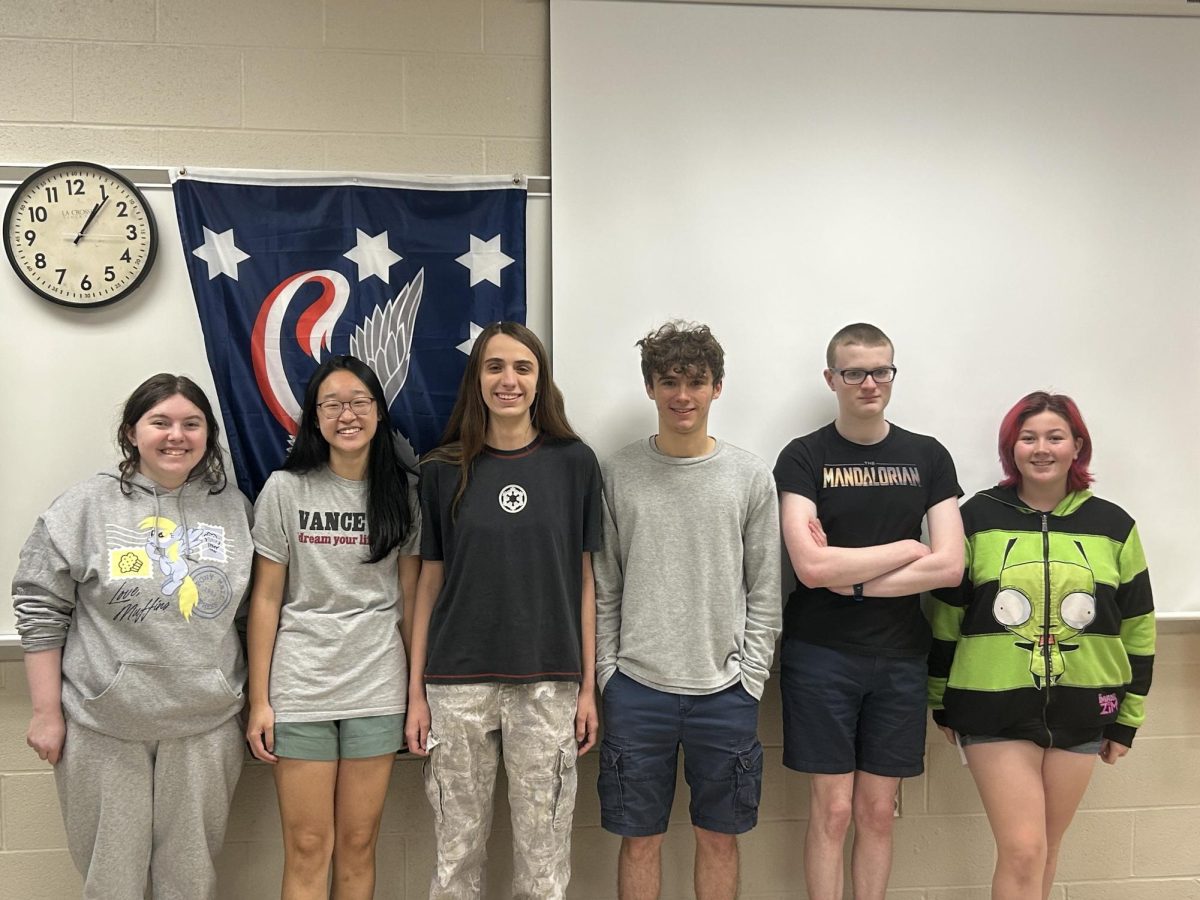






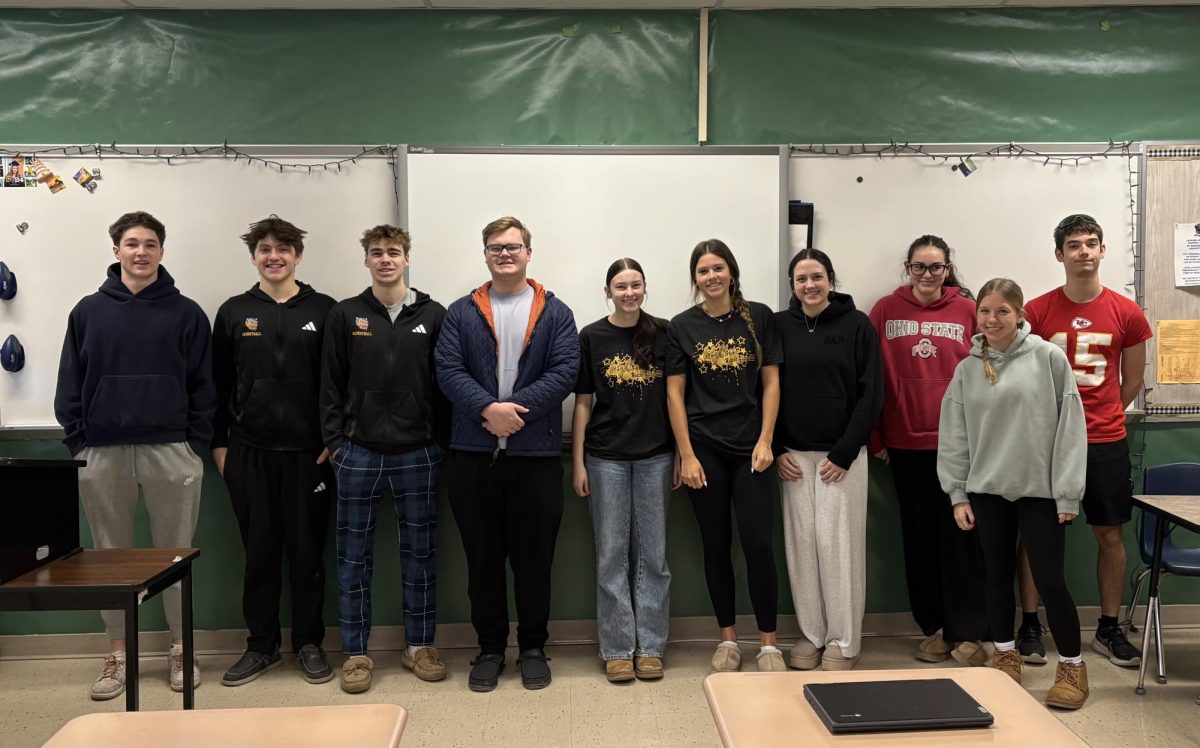
While teachers at IHS could give a written exams for midterms, Mrs. Sheryl Luoma assigned her Statistics and Probability class a putting experiment!
The statistics exam consisted of three main steps: preparing their materials and getting into groups, testing their theory and collecting data, and reporting their findings.
Students began preparing for the experiment at the beginning of their fourth unit, which is about “performing experistments and observational studies,” according to Luoma. At first, without any specific instruction, students were asked how they might conduct an experiment. As the unit progressed, Luoma referred back to the students’ original ideas and added formal language to their intuitive ideas.
Finally, Luoma introduced the controversy of anchored putting, a strategy where the putter stabilizes the end of their putt against their torso in the hopes that it would be more accurate. To find out if anchored putting was in fact better than traditional putting, the students split into groups and discussed the steps they would take to test it. Next, they agreed on the data they would collect, as well as which variables they would control. Students also considered adjusting an experiment if some subjects were generally more successful putters or if different lengths of putts influenced results. Those students then discussed how different the results needed to be in order to conclude that one technique is actually better than the other.
After all of this preparation, the statistics students were equipped with the tools to write a statement of using statistical language.
A week before the exam, the students separated into two groups, gathered the materials, and planned the procedure for the experiment.
On exam day, students received a form to document their data and answer questions about that data. After that, on their own, Luoma explained they would “assess their knowledge of the specific vocabulary and concepts” and write a statement regarding their final conclusion.
Luoma said the midterm went well.
The students concluded that the evidence could not prove that anchored putting actually provides an advantage, possibly due to “confounding variables” or small sample size.
Luoma also asked students to reflect on the process.
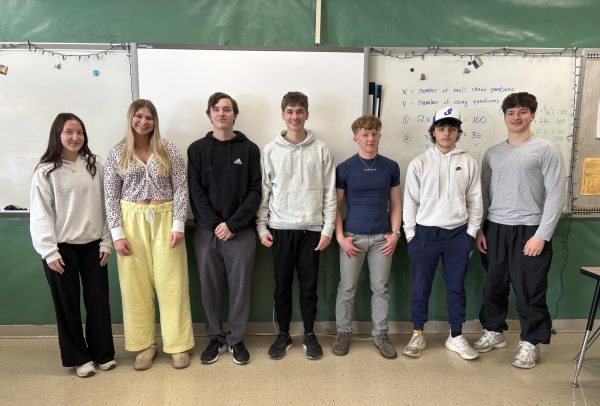
Many responded saying that the controlled variables, such as the distance to the hole and, the environment, should remain the same for future years. Others liked the flexibility or the “freedom for creativity” and stated that it was easy to understand.
Senior Brooke Vollman recalled that her personal successes included feeling prepared, and “going into the exam with a good mindset.” Vollman also felt challenged by the technical application of collecting data and using the correct format.
Junior Katie Ksiazka also felt prepared considering how much time she had to study with the snow days, and also she understood the material better when adding the physical putting aspect, even though she thought some of her results may be skewed due to her inexperience with the long putter.
Senior Becca Gibson added that she felt that she effectively practiced communication and teamwork while simultaneously weaving the lesson into the experience. Gibson, however, admitted that her putting skill was sub par.
Overall, this alternative style of exam was well received by the Statistics and Probability students!